What is the best time to visit Monforte de Lemos?
Late spring (May-June) and early autumn (September) offer mild weather ideal for exploring the town and the nearby Ribeira Sacra vineyards. Summer is also popular but can get quite hot inland.
How do you get to Monforte de Lemos?
The town has a train station with connections to Madrid, A Coruña, and Vigo, making rail a convenient option. If driving, it sits along the A-6 motorway, roughly an hour from Lugo and Ourense.
What are the must-see attractions in Monforte de Lemos?
Don’t miss the imposing Torre del Homenaje and the San Vicente del Pino monastery complex overlooking the town. The Colegio de Nuestra Señora de la Antigua, known as the ‘Escorial of Galicia,’ houses an impressive art collection including a piece attributed to El Greco.
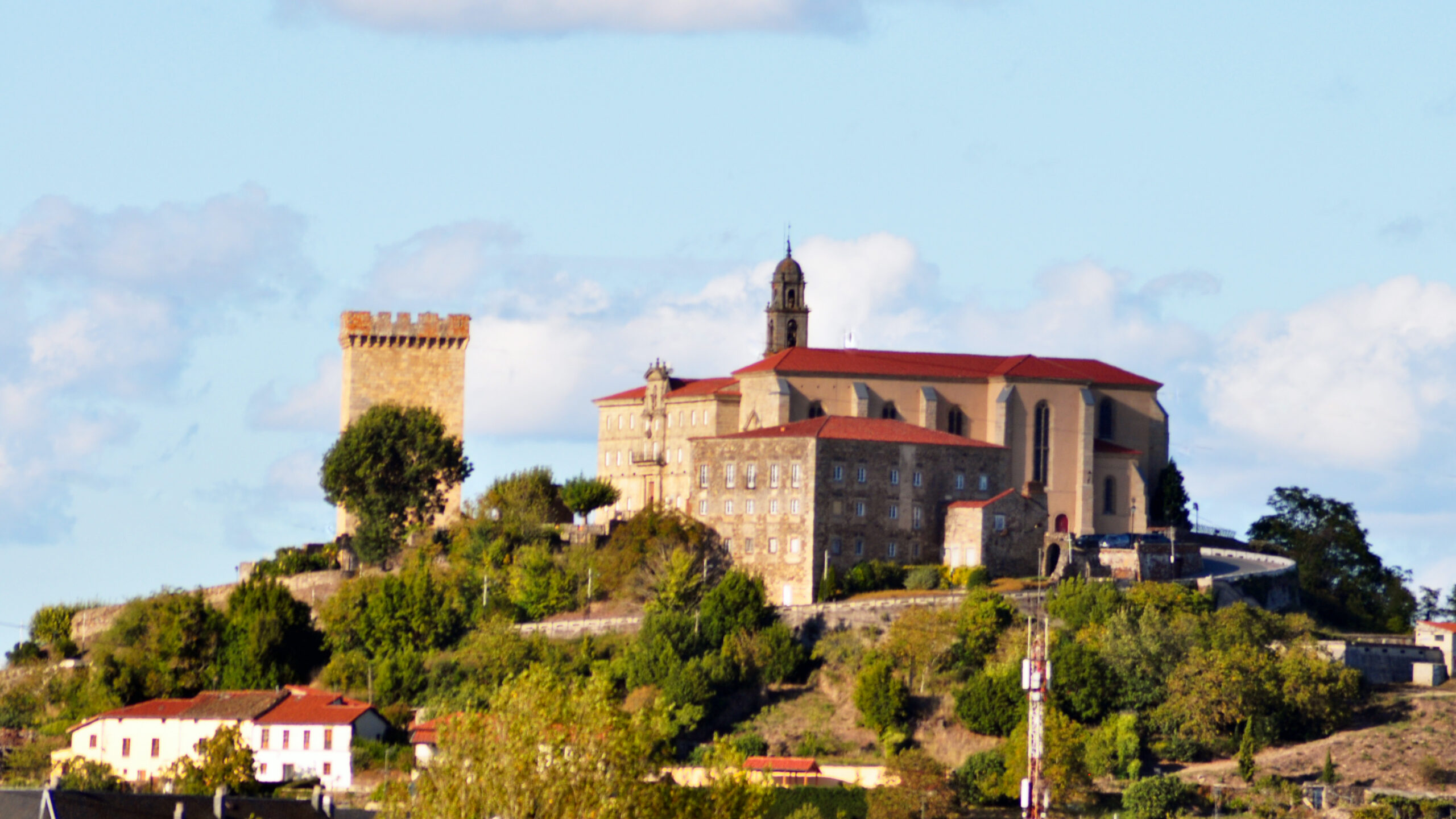
Monforte de Lemos sits where the Cabe River meets the edge of the Ribeira Sacra, a landscape of vine-covered gorges and hermit monasteries in the Lugo province of inland Galicia. Crowned by a hilltop monastery-turned-parador and a slender medieval keep, it’s a town that rewards travellers who want Galicia without the crowds of Santiago or the coast. Come for the wine, the history and the quiet, and stay for the region unfolding around it.
What to Do in Monforte de Lemos
Climb the Torre del Homenaje, one of Galicia’s tallest medieval keeps, for views over the town and the Cabe valley below. The monumental San Vicente do Pino complex, now partly a parador, is worth a wander even if you’re not staying there, while the Colegio de Nuestra Señora de la Antigua houses an unexpectedly rich art collection, including a canvas by El Greco, tucked inside a former Jesuit college. The old town’s arcaded streets and the Gothic bridge over the Cabe make for an easy, atmospheric stroll, and several bodegas around town offer tastings of local Mencía wine.
The Vibe: Slow, Monastic, Unhurried
Monforte de Lemos has the feel of a place that peaked centuries ago and never bothered chasing modern tourism, which is exactly its appeal. Stone monasteries, a working rail junction and a town square that still runs on local rhythms give it an authentic, lived-in character rather than a curated one. It’s quiet on weekdays, livelier around Semana Santa and market days, but never crowded in the way better-known Spanish cities can be.
Who This City Suits
Monforte de Lemos suits travellers drawn to wine regions, monastic architecture and slow, self-directed exploring rather than nightlife or beaches. It works well for couples and independent travellers who enjoy driving between small towns, and for wine enthusiasts curious about Ribeira Sacra’s steep vineyard terraces. Families and those seeking resort-style holidays will find little to occupy them here.
Getting to Monforte de Lemos
Monforte de Lemos is a genuine railway hub, with direct train connections to Madrid, Ourense, Lugo and A Coruña, making it one of the easier interior Galician towns to reach without a car. By road, it’s about 45 minutes from Ourense and just over an hour from Santiago de Compostela, both of which have airports with regular flights from major European cities. Once here, a car is useful for exploring the Ribeira Sacra canyons and monasteries scattered across the surrounding hills.
Combine It With Ribeira Sacra and Beyond
Monforte de Lemos makes an ideal base for exploring the Ribeira Sacra, where boat trips along the Sil River canyon and visits to riverside monasteries like Santo Estevo are a short drive away. Ourense, with its thermal hot springs and historic old town, pairs naturally with a Monforte stay, as does Lugo with its intact Roman walls. For a longer trip, Santiago de Compostela is close enough for a day visit while keeping Monforte as your quieter home base.
Festivals and Climate
Semana Santa (Holy Week) in Monforte de Lemos is declared of tourist interest and draws visitors for its solemn processions through the old town, one of Galicia’s more significant Easter celebrations. Spring and autumn bring mild, green weather ideal for hiking the vineyard terraces, while summers are warmer and drier than coastal Galicia thanks to the town’s inland position. Winters are cool and damp with occasional frost, so plan visits between April and October for the best conditions.