What is the best time to visit Celanova?
The best time to visit Celanova is during late spring (May-June) or early autumn (September), when temperatures are mild and rainfall is lower. Summer can get busy with local festivals, while winters are cool and wet, typical of inland Galicia.
How do you get to Celanova?
The nearest airport is Vigo, about an hour’s drive away, making a rental car the most convenient option. Regular bus services also connect Celanova to Ourense, from where trains and additional bus routes link to the rest of Galicia and Spain.
What are the main things to do in Celanova?
The highlight is the San Salvador Monastery, one of Galicia’s most important monastic complexes, featuring a Baroque church and the tiny pre-Romanesque chapel of San Miguel in its garden. Visitors can also explore the town’s arcaded main square and use Celanova as a base for exploring the surrounding countryside and nearby Portuguese border towns.

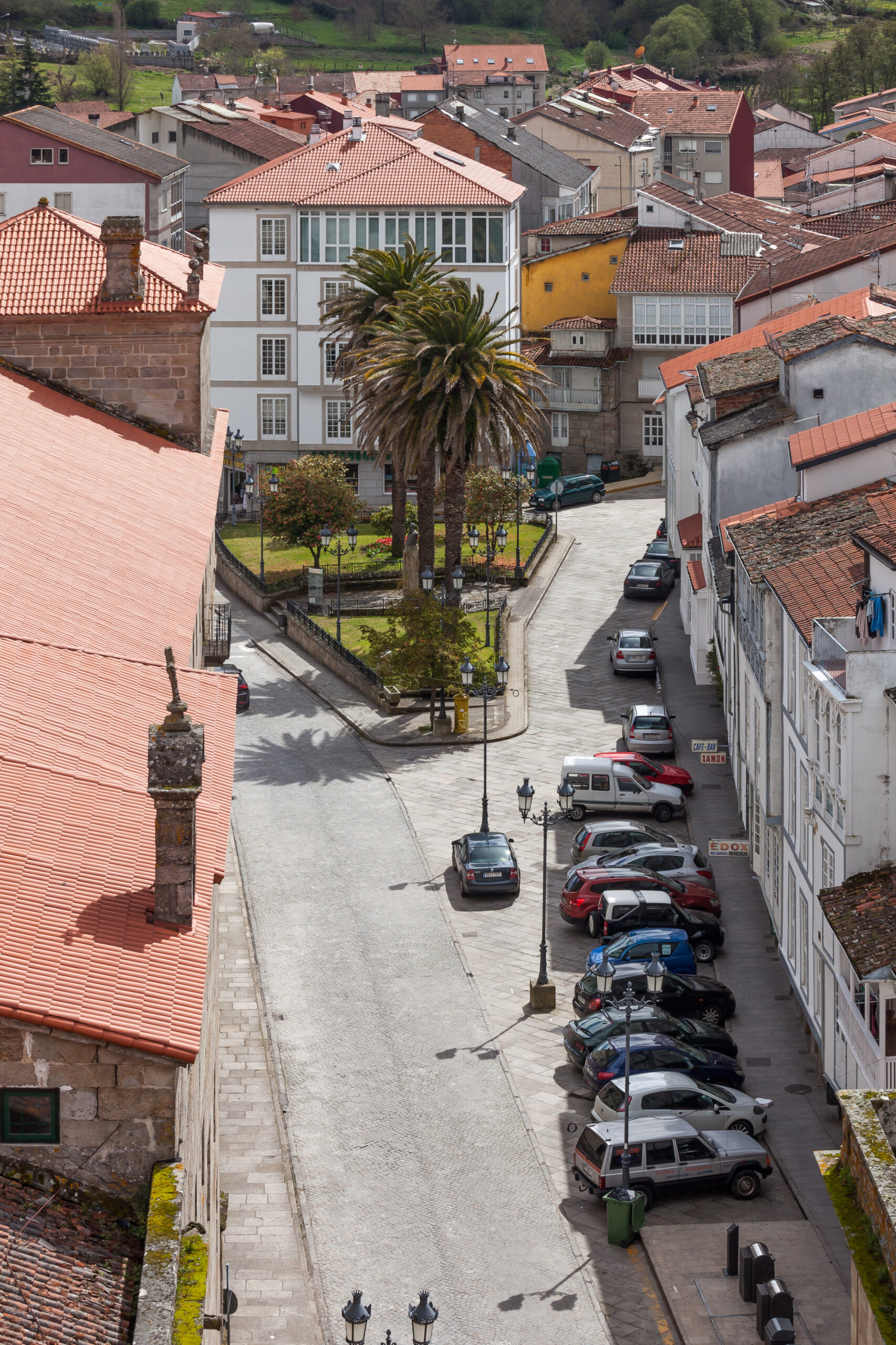
Tucked into the rolling countryside of southern Ourense province, Celanova is the kind of place travellers stumble upon rather than plan for — and end up glad they did. A monumental monastery dominates its modest town square, vineyards and chestnut woods surround it, and Portugal is close enough for an easy afternoon crossing. This is inland Galicia at its most unhurried, ideal for anyone tired of the crowded coast.
A Monastery That Punches Above Its Weight
Celanova’s skyline is defined by the Monastery of San Salvador, one of the largest Benedictine complexes in Spain, with a baroque facade far grander than the town’s size suggests. Inside its garden hides the tiny 10th-century Mozarabic chapel of San Miguel, a rare architectural survivor built by monks fleeing Al-Andalus, and one of the few genuine Mozarabic buildings left in Galicia. Wander the arcaded old town afterwards, where granite houses and quiet plazas show a Galicia that rarely makes the postcards.
The Vibe: Slow, Green and Unpolished
Celanova doesn’t perform for visitors — daily life still revolves around the market, the church bells and the local bar terrace. The surrounding landscape of vineyards, eucalyptus and oak woodland gives the town a soft, agricultural rhythm rather than a touristy one. It’s a place to slow down, not tick off sights.
Wine, Chestnuts and Village Taverns
This corner of Ourense sits within Galicia’s inland wine country, close to the Ribeiro appellation, so expect unpretentious taverns pouring crisp local whites alongside octopus, empanada and hearty caldo gallego. Autumn brings chestnut roasts (magostos), a genuinely regional tradition rather than a tourist add-on. Meals here are simple, generous and cheap by Spanish coastal standards.
Entroido: Ourense Province’s Wild Carnival Season
February and March bring Entroido, the ancestral Carnival tradition that inland Ourense is famous for across Spain, with costumed figures, processions and village-wide feasting. Celanova joins neighbouring towns in celebrating this pre-Lenten season, and while the biggest costumed runs happen in nearby villages, the whole district takes on a festive, communal energy worth timing a visit around.
Who Celanova Suits
This is a destination for slow travellers, history buffs and anyone road-tripping through inland Galicia or northern Portugal who wants a genuine, uncommercialised stop. It suits couples and independent travellers more than families chasing beaches or nightlife, and rewards those happy to explore on foot or by car rather than follow a packed itinerary.
Getting There and Combining Celanova with the Region
Celanova has no train station, so the easiest route is by car, roughly 30 minutes south of Ourense city or under two hours from Vigo and Santiago de Compostela airports. From here, it’s simple to combine Celanova with Ourense’s historic centre and thermal baths, the medieval town of Allariz, the Ribeiro vineyards, or a border crossing into Portugal’s Peneda-Gerês region. Spring and autumn bring the mildest, greenest weather for exploring, while inland summers run hotter and drier than Galicia’s coast, and winters can turn crisp with occasional frost.