Wat is de beste tijd om Carnota te bezoeken?
De late lente en zomer (juni tot september) zijn ideaal vanwege mild weer en de mogelijkheid om het strand en de horreo te bezichtigen. Buiten het hoogseizoen is het rustiger, maar het weer kan wisselvalliger zijn.
Hoe kom ik in Carnota aan?
De dichtstbijzijnde luchthaven is Santiago de Compostela, van waaruit je met de auto ongeveer een uur naar Carnota rijdt. Er zijn ook busverbindingen vanuit Santiago en A Coruña, al is een huurauto handig om de omgeving flexibel te verkennen.
Wat zijn de belangrijkste bezienswaardigheden in Carnota?
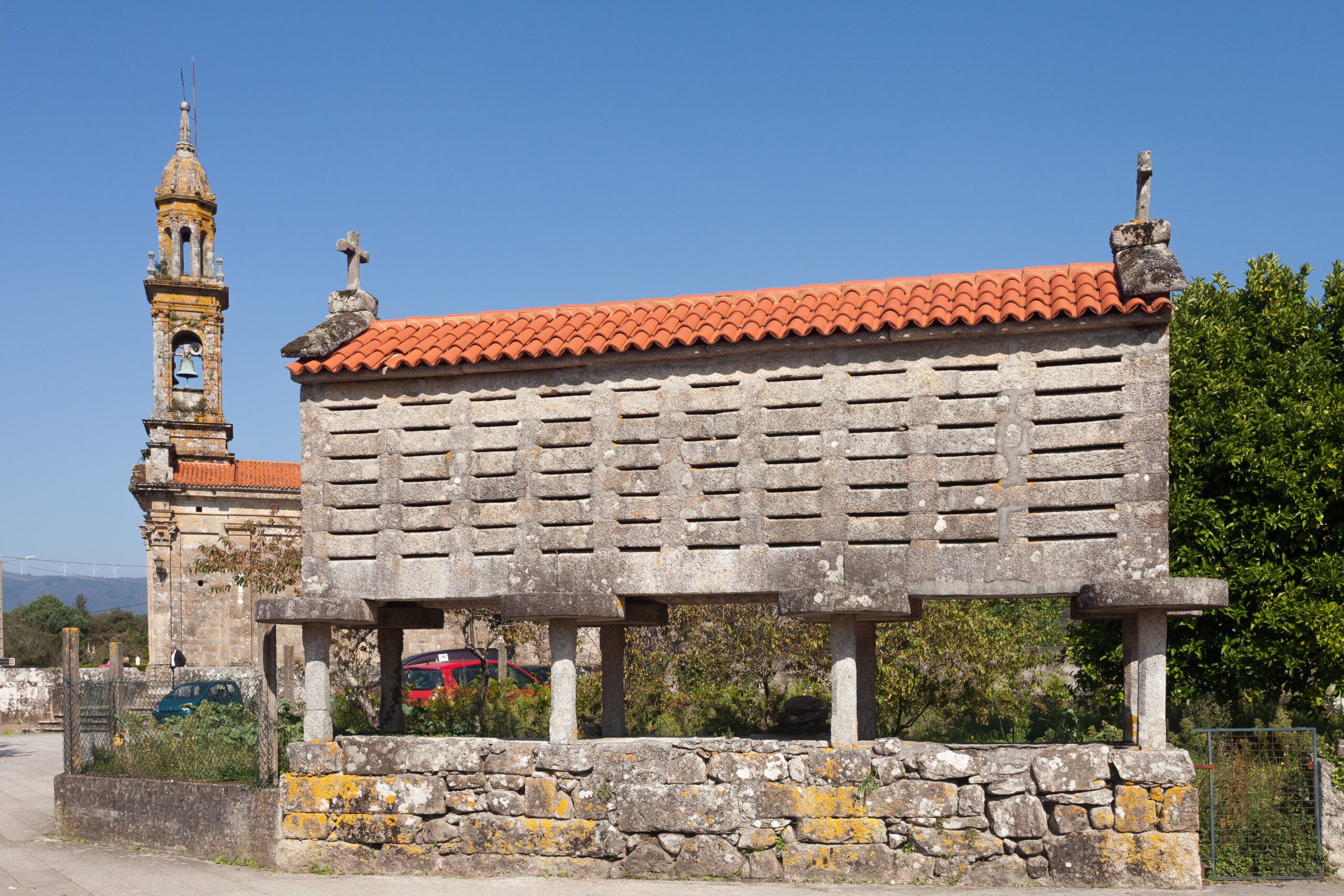
De horreo de Carnota, de langste graanschuur van Galicië, is de grootste attractie, samen met het uitgestrekte Praia de Carnota strand. Ook het natuurpark Monte Pindo en de nabijgelegen vissersdorpjes zijn een bezoek waard.
Carnota is a scattered parish on Galicia’s Costa da Morte where a single, extraordinary building has quietly put a fishing-and-farming village on the map. Beyond that landmark, though, this is a destination for travellers who want empty beaches, granite peaks and a slower pace, not resort crowds. It’s the kind of place you drive through Galicia to find, rather than stumble upon.
A Village Built Around a Giant Granary
The Hórreo de Carnota, raised in the 18th century, is the longest traditional granary in the world at over 34 metres, a stone-and-wood structure that once stored the parish’s rye and maize harvests. Walking around it, next to the old church of Santa Comba, gives a real sense of how rural Galicia organised itself around communal food storage long before tourism arrived. It’s a genuinely rare sight, not a staged attraction, and still sits in daily use within the village fabric.
Wild Beaches and the Celtic Olympus
Praia de Carnota is one of the longest beaches in Galicia, a wide sweep of sand backed by dunes and almost always uncrowded, ideal for long walks rather than sunbathing crowds. Behind it rises Monte Pindo, nicknamed the ‘Celtic Olympus’ for the myths attached to its granite outcrops, offering hiking routes with sweeping Atlantic views. Nearby, the Fervenza do Ézaro is one of the few waterfalls in Europe that drops directly into the sea, a short detour worth making.
Who Carnota Suits
This is a destination for independent travellers with a car, hikers, and anyone drawn to rural Spain over its beach resorts. Photographers, birdwatchers and people who enjoy quiet coastal drives will feel at home here, while those wanting nightlife, shopping or English-speaking tourist infrastructure should look elsewhere in Spain. Families comfortable with self-catering rural stays and slow days will also find plenty of space to roam.
Getting to Carnota
The nearest airport is Santiago de Compostela, about 45 minutes to an hour’s drive away, making it the practical gateway for a Carnota Spain holiday. From there, the AC-303 and local roads wind through farmland and pine forest down to the coast; public transport is limited, so a rental car is strongly recommended. Some visitors also arrive via A Coruña airport, roughly 1.5 hours north, combining it with a wider Galician road trip.
Pairing Carnota with the Rest of Galicia
Carnota sits naturally on a Costa da Morte itinerary alongside Fisterra (Finisterre), long considered the symbolic end of the earth by pilgrims, and the fishing town of Muros with its granite arcaded streets. Santiago de Compostela makes an easy day trip for cathedral and old-town culture, while the Rías Baixas further south offer wine country and gentler estuary towns for contrast. Together they form a loop that mixes history, coastline and inland Galicia without retracing the same roads.
Food, Festivals and Seasons
Local cooking leans on Atlantic seafood, including percebes (goose barnacles) hand-harvested from the region’s dangerous rocky shoreline, alongside octopus and simple grilled fish in village taverns. Summer brings local patron saint festivals (romerías) with processions, music and shared meals in the parish squares, typically in July and August. Climate-wise, expect mild, green springs with rain showers, warm but rarely scorching summers, atmospheric misty autumns, and wet, windswept winters typical of Galicia’s Atlantic coast.