What is the best time to visit Aragón?
The best time to visit Aragón is during spring (April-June) or autumn (September-October) when temperatures are mild, ideal for exploring cities and the Pyrenees. Summers can be very hot in the lowlands, while winter is best for skiing in the northern mountains.
How do I get to Aragón?
The main gateway is Zaragoza, which has its own airport and excellent high-speed train connections to Madrid and Barcelona. Many travellers also fly into Madrid or Barcelona and continue by train or car, as Zaragoza is roughly 1.5 hours from both cities.
What are the must-see attractions in Aragón?
Highlights include the Basilica del Pilar and Aljafería Palace in Zaragoza, the medieval town of Albarracín, and the stunning Ordesa y Monte Perdido National Park in the Pyrenees. History lovers should also visit Teruel for its unique Mudéjar architecture.
Tucked between the French border and the Ebro basin, Aragón is one of Spain’s least visited yet most dramatic regions, swinging from 3,000-metre Pyrenean summits to sun-baked steppe within a couple of hours’ drive. It’s a region built for slow, exploratory travel, where medieval towns sit largely untouched by mass tourism and nature reserves stretch for miles without another hiker in sight.
Where Mountains Meet Empty Plains
Aragón occupies Spain’s northeastern interior, split into three very different provinces: mountainous Huesca along the French border, the Ebro valley heartland of Zaragoza, and the sparsely populated highlands of Teruel to the south. The contrast is the region’s defining trait — glacial peaks like Aneto and Monte Perdido give way to limestone canyons and, further south, to a rural landscape so depopulated it’s earned the nickname ‘Spanish Lapland’. That emptiness is exactly what draws travellers seeking uncrowded trails and genuine wilderness rather than polished coastal resorts.
Historic Towns Worth the Detour
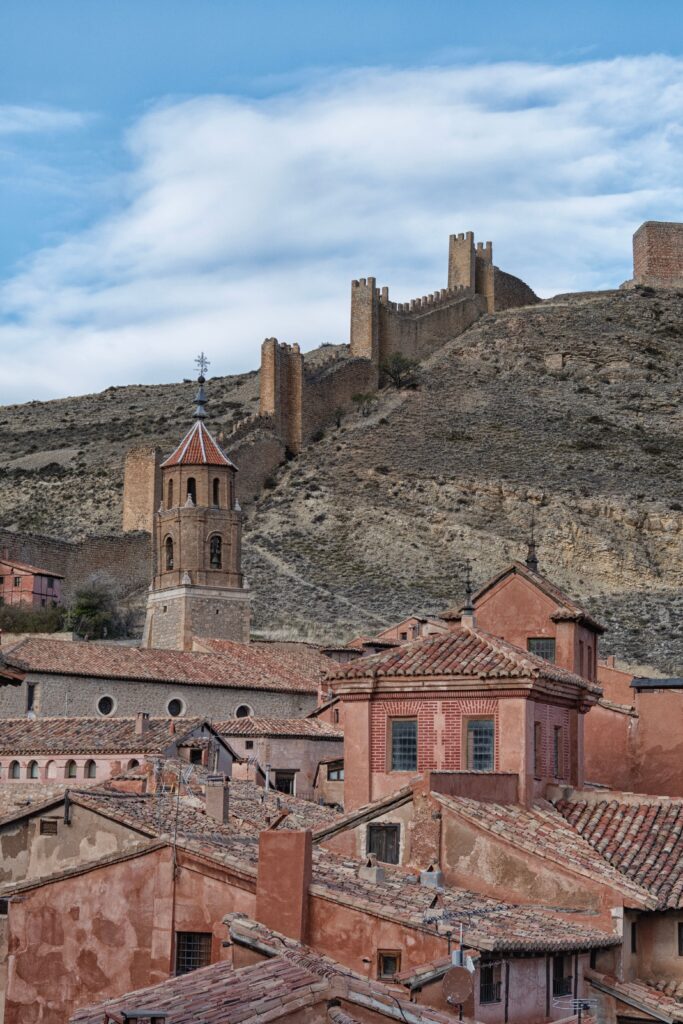
Zaragoza, the regional capital, pairs the Baroque Basílica del Pilar with the Aljafería, a UNESCO-listed Mudéjar palace unlike anything else in Spain. Further north, Jaca guards the old Camino de Santiago route into the Pyrenees, while clifftop Alquézar and pink-stone Albarracín rank among the most striking medieval villages in the country. Teruel city, with its own UNESCO Mudéjar towers and the legend of the tragic ‘Lovers of Teruel’, rounds out a region far richer in heritage than its quiet reputation suggests.
Adventure, Slow Culture and Local Flavours
Aragón suits hikers, canyoners and cyclists as much as culture travellers drawn to Mudéjar architecture without the queues of Andalusia; the Sierra de Guara around Alquézar is one of Europe’s top canyoning destinations. Zaragoza’s Fiestas del Pilar in October fill the streets with the jota aragonesa, giant processional figures and folk parades, while the table brings ternasco de Aragón (roast lamb), Somontano wines and Teruel’s DO-protected ham. In a handful of Pyrenean valleys you’ll still hear Aragonese spoken, a quiet reminder of the region’s distinct identity within Spain.
Climate and When to Go
Spring brings mild temperatures and wildflowers to the lowlands, ideal for walking before summer heat sets in. Summer turns the Ebro valley genuinely hot and dry (often above 35°C), but the high Pyrenees stay cool and are at their best for serious trekking. Autumn is arguably the sweet spot, with crisp air suited to exploring Teruel’s highlands and Mudéjar towns, while winter blankets the Pyrenees in snow, drawing skiers to resorts like Formigal and Candanchú as the valley below turns cold and foggy.
Getting There and Combining Regions
Zaragoza’s airport has limited direct flights, so most travellers arrive via Madrid or Barcelona and continue by AVE high-speed train — under 90 minutes from either city. From there, Aragón connects naturally with Catalonia’s Lleida Pyrenees, Navarra’s Camino de Santiago towns, La Rioja’s wine country, and the Maestrazgo landscapes stretching into Valencia and Castellón, making it an easy add-on to a wider northern Spain itinerary.