Wat is de beste tijd om Zaragoza te bezoeken?
Het voorjaar (april-juni) en het najaar (september-oktober) zijn ideaal vanwege het milde klimaat. De zomer kan erg heet worden met temperaturen boven de 35°C.
Hoe kom ik in Zaragoza en hoe reis ik er verder?
Zaragoza is uitstekend bereikbaar via het hogesnelheidstrein (AVE) station Delicias, met verbindingen vanuit Madrid en Barcelona in circa 1,5 uur. De stad zelf is compact en goed te voet of met de tram te verkennen.
Wat zijn de belangrijkste bezienswaardigheden in Zaragoza?
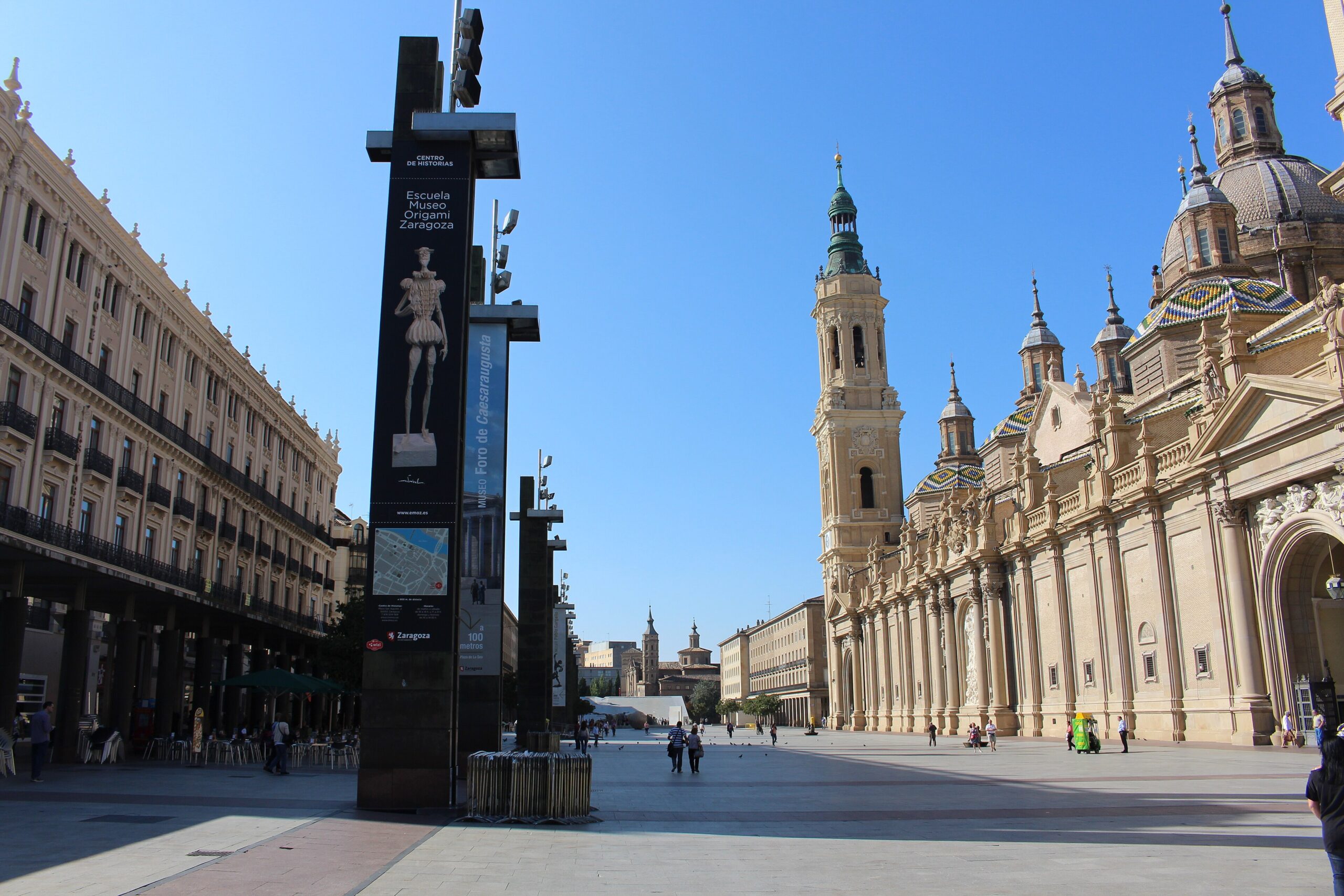
Mis de indrukwekkende Basílica del Pilar en het Moorse paleis Aljafería niet, beide iconische symbolen van de stad. Ook een wandeling langs de rivier de Ebro en door de historische wijk El Tubo, bekend om zijn tapas, is een aanrader.
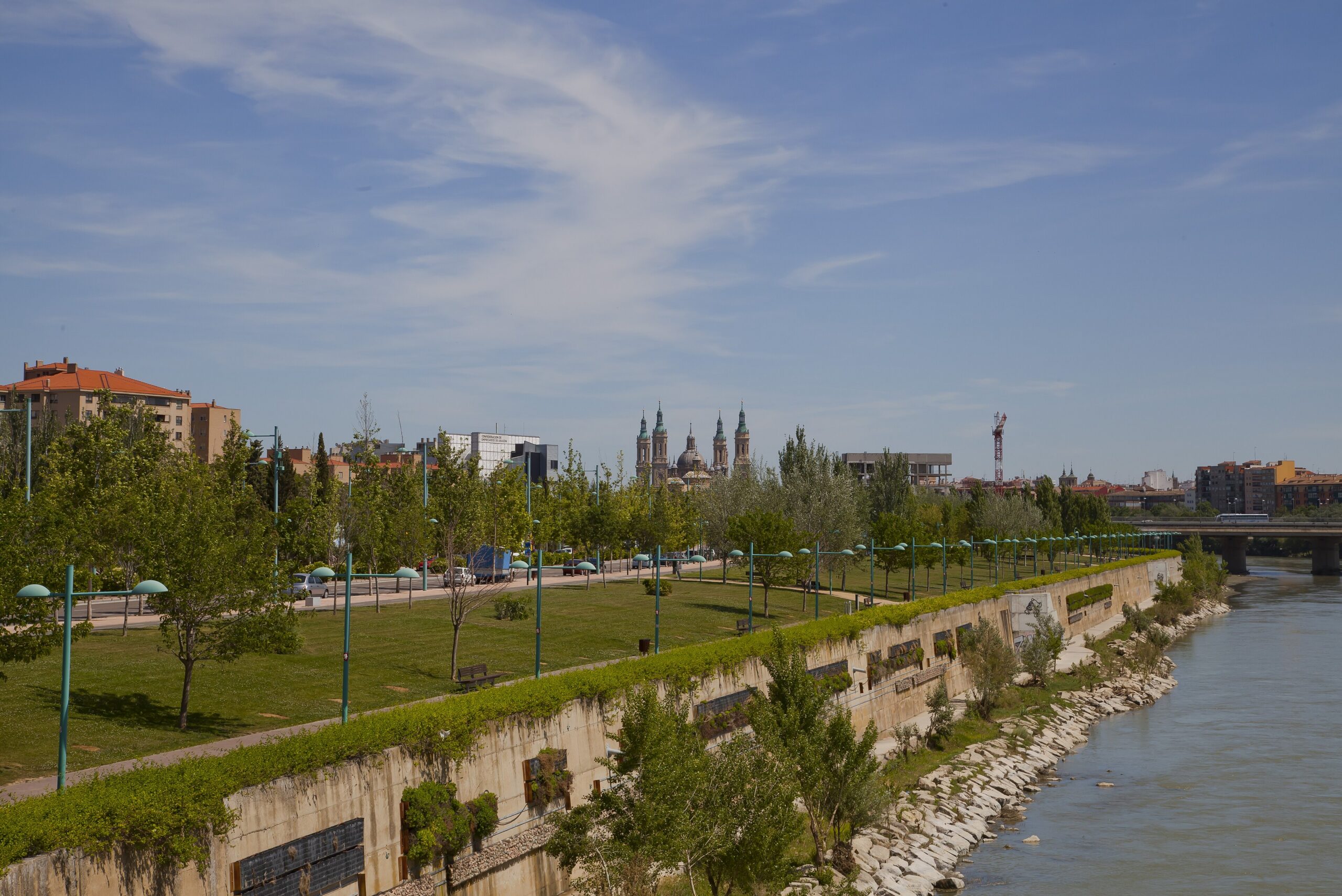
Zaragoza sits almost exactly halfway between Madrid and Barcelona, yet it feels like neither, a proud regional capital with its own rhythm, its own saint’s day, and a skyline dominated by one of Spain’s most photographed basilicas. This is a city for travellers who want the substance of a major Spanish destination, Roman roots, Islamic palaces, Goya frescoes, without the crowds or the price tag of the coast. Come for the architecture and the tapas bars of El Tubo, stay for the discovery that Aragón’s real treasures, the Pyrenees, Teruel, the Monasterio de Piedra, are all within easy striking distance.
Basilicas, Palaces and Roman Bones
The Basílica del Pilar dominates the riverside with its tiled domes and Goya ceiling frescoes, and it’s the spiritual centre of Hispanic Catholicism, said to mark the spot where the Virgin appeared to St James. A few streets away, La Seo cathedral and the Aljafería Palace, an 11th-century Moorish fortress later used by Christian kings, are both UNESCO-listed Mudejar architecture, a style unique to Aragón blending Islamic and Christian craftsmanship. Underneath it all lies Caesaraugusta, the Roman city Zaragoza was named for, whose forum, river port and theatre are now open as excavated museum sites right in the modern centre.
A Working City, Not a Postcard
Zaragoza doesn’t perform for tourists the way Seville or Barcelona sometimes do; it’s a genuine Spanish city where locals fill the plazas at 9pm and the tapas bars stay loud until late. That makes it ideal for travellers who want an authentic, unpolished slice of Spain, couples on a city break, culture-focused travellers, and anyone road-tripping between Madrid and Barcelona who wants a worthwhile stopover rather than a highway service station. It’s less suited to those chasing beaches or big-name nightlife; here the appeal is architecture, food and an unhurried, distinctly Aragonese pace of life.
Tapas in El Tubo
El Tubo, the tangle of narrow streets behind Plaza del Pilar, is where Zaragoza eats: standing-room bars serving small plates for a couple of euros each, best tackled by ordering one dish and one drink per stop and moving on. Look for ternasco de Aragón, milk-fed lamb roasted with rosemary, and borraja, a regional vegetable rarely seen outside Aragón, alongside classics like migas and jamón. It’s a bar-hopping culture rather than a sit-down-dinner one, and the atmosphere on a Friday night, with locals spilling out onto the cobbles, is part of the experience.
Fiestas del Pilar
For ten days around 12 October, Zaragoza gives itself over to the Fiestas del Pilar, one of Spain’s largest city festivals, built around the Ofrenda de Flores, when hundreds of thousands of people file past the basilica to lay flowers at a giant floral statue of the Virgin. Expect giants-and-bigheads parades, free concerts, bullfights, fireworks over the Ebro, and a city-wide atmosphere of controlled chaos that’s very different from the quieter Zaragoza you’ll find the rest of the year. Booking accommodation well ahead is essential if your trip coincides with these dates.
Getting to Zaragoza
Zaragoza’s biggest practical advantage is its position: the AVE high-speed train connects it to Madrid in around 1 hour 20 minutes and to Barcelona in roughly 1 hour 40, arriving at the striking Delicias station, making it a genuinely easy add-on to a bigger Spanish itinerary. Zaragoza Airport handles a modest number of European routes, mostly seasonal and low-cost, so most international visitors fly into Madrid or Barcelona and take the train onward. Drivers will find it sits directly on the A-2 and A-23 motorways, with plenty of free parking near the centre compared to Spain’s bigger cities.
Beyond Zaragoza: Aragón’s Wild Side
Use Zaragoza as a base and Aragón opens up quickly: the Monasterio de Piedra, a 12th-century monastery wrapped around dramatic waterfalls and grottoes, is about 90 minutes south, while the Mudejar towers of Teruel make for a memorable day trip further south still. North lies Huesca province and the Pyrenees, including the Ordesa y Monte Perdido National Park, a serious hiking destination for those with an extra day or two. Wine lovers can detour to Cariñena, one of Spain’s oldest wine appellations, just outside the city.
Climate Through the Seasons
Spring (March–May) is mild and one of the best times to visit, though the famous cierzo wind, a strong, dry gust funnelled down the Ebro valley, can pick up without warning. Summer (June–August) is hot and dry, often pushing past 35°C, better suited to early mornings and long lunches indoors than midday sightseeing. Autumn (September–November) brings warm days and cool nights, plus the Fiestas del Pilar in October, while winter (December–February) is cold and occasionally foggy, but rarely as harsh as Madrid or the interior plateau.