Wat is de beste tijd om Mérida te bezoeken?
De ideale periodes zijn lente (april-juni) en herfst (september-oktober), wanneer de temperaturen aangenaam zijn voor het verkennen van de Romeinse ruïnes. De zomer kan er erg heet worden, met temperaturen die vaak boven de 35°C uitkomen.
Hoe kom ik in Mérida en hoe reis ik er rond?
Mérida is bereikbaar per trein of bus vanuit Madrid (ongeveer 4-5 uur) of Sevilla, en heeft een klein regionaal vliegveld met beperkte verbindingen. Het historische centrum is compact en uitstekend te voet te verkennen, waardoor een auto niet noodzakelijk is.
Wat zijn de must-see bezienswaardigheden in Mérida?
Mis het Romeinse theater en amfitheater niet, twee van de best bewaarde monumenten uit de Romeinse tijd in Spanje, samen met het Nationaal Museum voor Romeinse Kunst. Ook de Romeinse brug over de Guadiana en het Alcazaba (Moors fort) zijn een bezoek waard.
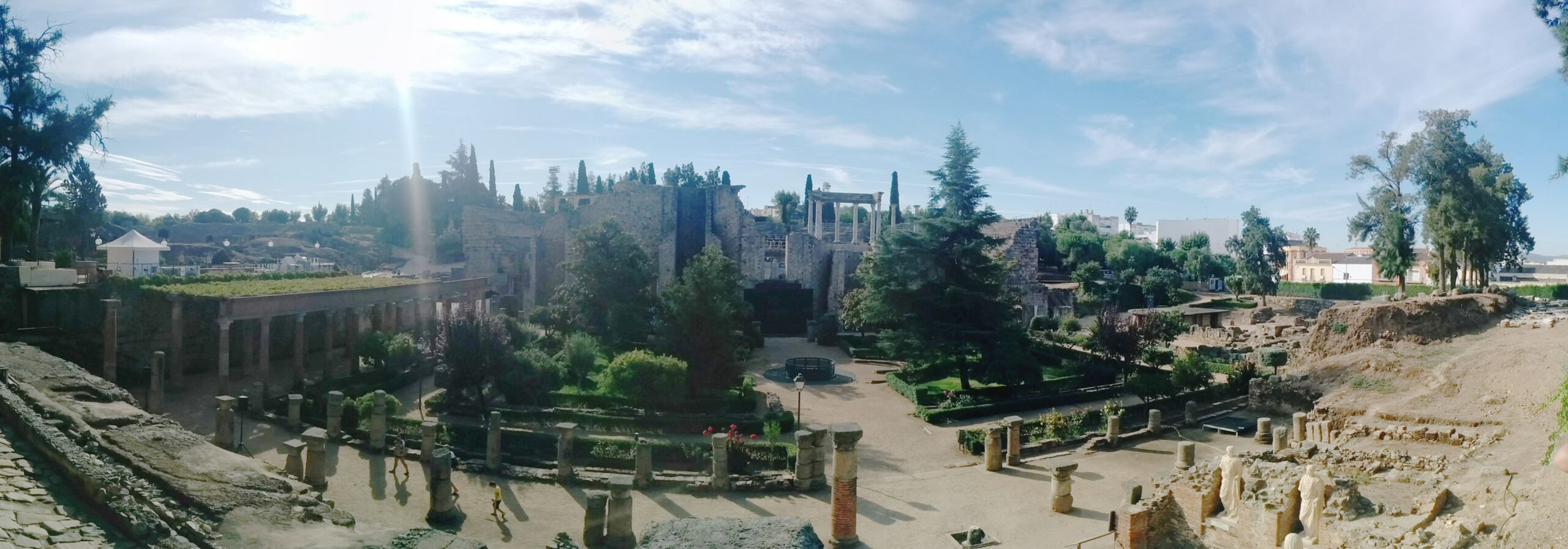
Mérida packs more intact Roman history into one city than almost anywhere else in Spain, yet remains refreshingly free of crowds. Once the capital of Roman Lusitania, it’s now Extremadura’s understated capital, where ancient theatres and bridges sit alongside everyday Spanish life. For a Mérida Spain holiday that mixes deep history with genuine local rhythm, few cities deliver as much per square kilometre.
Ancient Rome in the Heart of Extremadura
Mérida was founded in 25 BC as Augusta Emerita, capital of Roman Lusitania, and today holds Spain’s largest and best-preserved collection of Roman remains, recognised by UNESCO. Wander through the Roman Theatre with its two-tier marble colonnade, which still hosts the Festival Internacional de Teatro Clásico each July and August, and explore the adjoining amphitheatre where gladiators once fought. Cross the 792-metre Roman bridge over the Guadiana, still used by pedestrians today, then dive into the National Museum of Roman Art, whose sunken galleries display mosaics and statues unearthed from the city itself.
A City of Quiet Confidence
Unlike Spain’s headline Roman sites, Mérida doesn’t feel like an open-air museum overwhelmed by visitors, it’s a working provincial capital where locals go about daily life among 2,000-year-old columns. Terraces spill onto Plaza de España in the evening, cafés pour extremeño wine at prices that haven’t caught up with Andalusia’s tourist towns, and the pace rewards travellers happy to linger over ruins rather than rush between them.
Who Should Visit Mérida
Mérida suits history enthusiasts, architecture lovers and independent travellers who prefer substance over spectacle, plus anyone road-tripping through inland Spain who wants a solid cultural anchor point. It’s less suited to beach-seekers or those craving nightlife-heavy cities, since Mérida’s charm lies in its ruins, museums and unhurried squares rather than clubs or coastline.
Getting to Mérida
Mérida has its own train station with direct connections to Madrid (around 4 hours), Badajoz, Cáceres and Seville, making rail the easiest option for visitors without a car. The nearest airport is Badajoz, about 45 minutes away with limited routes, so most international travellers fly into Madrid or Seville and continue by train or by road via the A-5 and A-66 motorways. Driving gives the freedom to combine Mérida with Extremadura’s smaller towns, many of which have no rail service at all.
Pairing Mérida with the Rest of Extremadura
Mérida works perfectly as a base for exploring Extremadura’s cluster of historic towns: Trujillo and Cáceres, both roughly an hour away, add medieval squares and conquistador mansions to the Roman theme, while Zafra and Badajoz bring in Moorish and Portuguese-border influences. The surrounding dehesa landscape, dotted with oak trees and free-range Ibérico pigs, makes for scenic drives between destinations, and the Portuguese city of Elvas is close enough for an easy cross-border day trip.
Climate: When to Go
Spring (March-May) and autumn (September-November) are Mérida’s best seasons, with mild days around 20-25°C ideal for walking the ruins. Summer turns fierce, regularly exceeding 38-40°C through July and August, so visits then call for early mornings, late evenings and plenty of shade. Winters stay relatively mild by Spanish inland standards, hovering around 10-14°C, with occasional cold snaps but rarely freezing, making Mérida a viable year-round city break.