What is the best time of year to visit Seville?
The ideal months are April, May, September and October when temperatures are mild and pleasant. Summer (June-August) can be extremely hot, often exceeding 40°C, so it’s best avoided for sightseeing.
How do you get to Seville and around the city?
Seville Airport (SVQ) connects to major European cities, and high-speed AVE trains link it to Madrid in about 2.5 hours. Once there, the historic center is best explored on foot or by bike, as it’s compact and largely pedestrian-friendly.
What are the must-see sights and average daily budget in Seville?
Top attractions include the Alcázar, Seville Cathedral with the Giralda tower, and the Plaza de España. A comfortable daily budget of €70-100 per person covers meals, attractions, and mid-range accommodation, though budget travelers can manage on less.
Seville is Andalusia’s beating heart, a city where Moorish palaces, baroque churches and flamenco bars sit within walking distance of each other. Once the gateway for Spanish galleons returning from the Americas, it still carries an air of theatrical grandeur, best explored slowly, tapas plate in hand.
Palaces, Plazas and Rooftop Views
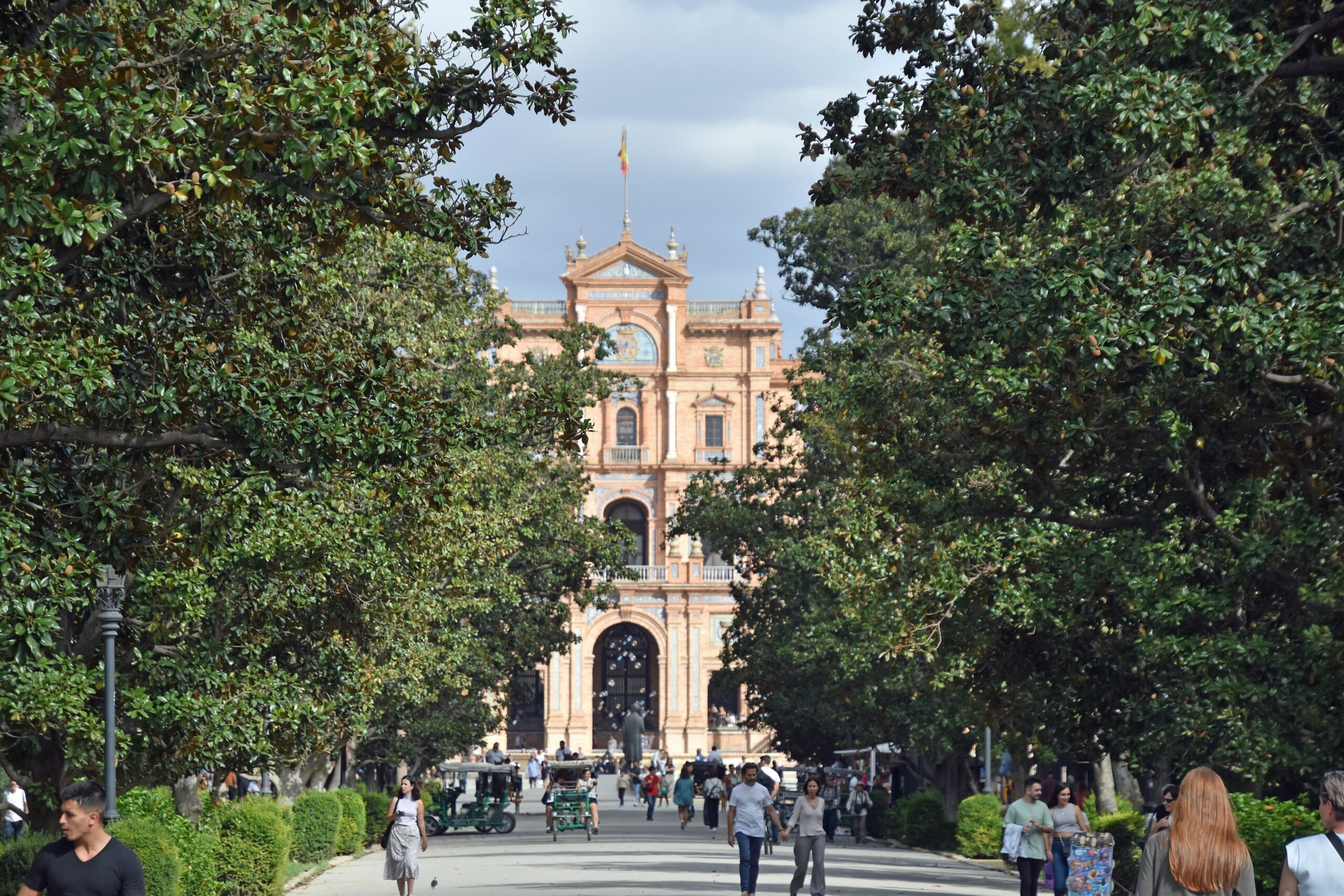
The Real Alcázar, a working royal palace still used by the Spanish crown, is the city’s showpiece, its Mudéjar courtyards and gardens rivaling anything in Granada. Climb the Giralda, the old minaret turned bell tower, for rooftop views over a cathedral so vast it was reportedly built to make future generations think its founders were mad. Plaza de España, with its tiled alcoves representing every Spanish province, and the winding streets of the old Jewish quarter, Santa Cruz, round out a city centre that rewards aimless wandering as much as ticking off sights.
A City That Performs
Seville doesn’t do quiet evenings: bars in the Triana and Alameda neighbourhoods spill into the street from early evening, and impromptu flamenco can erupt in the most unassuming corners. The Guadalquivir riverbank is where locals jog, cycle and gather at sunset, giving the city a rhythm that feels lived-in rather than staged for visitors. It’s a place with genuine swagger, unhurried by day and unapologetically loud by night.
Who Seville Suits
Seville works well for travellers who want culture without the queues of Barcelona or Madrid, and for couples or small groups drawn to architecture, food and nightlife in equal measure. It’s also a strong choice for first-time visitors to Spain, since its compact centre is easily walkable and its sights feel manageable in three or four days. Families do well here too, especially with older children who’ll enjoy the horse-drawn carriages, river boat trips and open squares.
Getting to Seville
Seville Airport (SVQ) connects directly to major European cities and handles a growing number of low-cost routes, putting the city centre just a 20-minute taxi or bus ride away. High-speed AVE trains link Seville to Madrid in under two and a half hours, making a combined city break with the capital entirely feasible. Drivers arriving from Portugal or the Costa del Sol will find the city well served by motorways, though the historic centre itself is best explored on foot.
Feria and Semana Santa
Seville’s Holy Week (Semana Santa), in March or April, sees elaborate religious processions carry ornate floats through the streets day and night, drawing crowds from across Spain. Two weeks later comes the Feria de Abril, a week-long fair of flamenco dresses, sherry, horse parades and all-night dancing held in a temporary tent city on the fairgrounds. Both events transform Seville completely, so book well ahead if you want to experience either, or plan around them if you’d rather see the city at its everyday pace.
Tapas, Sherry and the Triana Ritual
Seville treats tapas as a genuine way of eating rather than a tourist gimmick, with locals hopping between bars for a single plate and a small glass of chilled fino sherry before moving on. Look for espinacas con garbanzos (spinach and chickpeas, a legacy of the city’s Moorish past) and the ubiquitous jamón ibérico, best enjoyed standing at a zinc counter in the Triana market. Sherry itself, from nearby Jerez, is taken seriously here, often served ice-cold as an aperitif rather than a dessert wine.
Combine Seville With
Seville pairs naturally with Córdoba, an hour away by train, for its own Mezquita and Jewish quarter, or with Cádiz, Spain’s oldest city, for coastal air and seafood. Ronda’s dramatic gorge and Jerez de la Frontera’s sherry bodegas both make easy day trips, while the whitewashed villages of the Sierra de Grazalema suit travellers wanting a slower, rural contrast after the city’s intensity. Those with more time often continue on to Granada, roughly three hours away, to complete Andalusia’s classic trio of Moorish cities.
Seville’s Seasons
Spring (March to May) is the best time to visit, with warm days, blooming orange blossom and the major festivals, though accommodation books up fast. Summer (June to August) is punishingly hot, often exceeding 40°C, and best handled with a siesta-style schedule or avoided altogether. Autumn (September to November) brings back mild, pleasant weather and thinner crowds, while winter (December to February) is mild by northern European standards, rarely dropping below 8°C, and ideal for sightseeing without the heat or queues.