Oviedo doesn’t try to be Spain’s postcard image — no flamenco, no scorching plazas, just a compact, dignified capital wrapped in Atlantic mist and centuries of history. It’s the kind of city where a morning among UNESCO-listed churches slides naturally into an afternoon of cider-splashing and market browsing. For travellers craving Green Spain’s quieter, greener version of culture and gastronomy, Oviedo makes an ideal, unhurried base.
A capital built on Asturian history
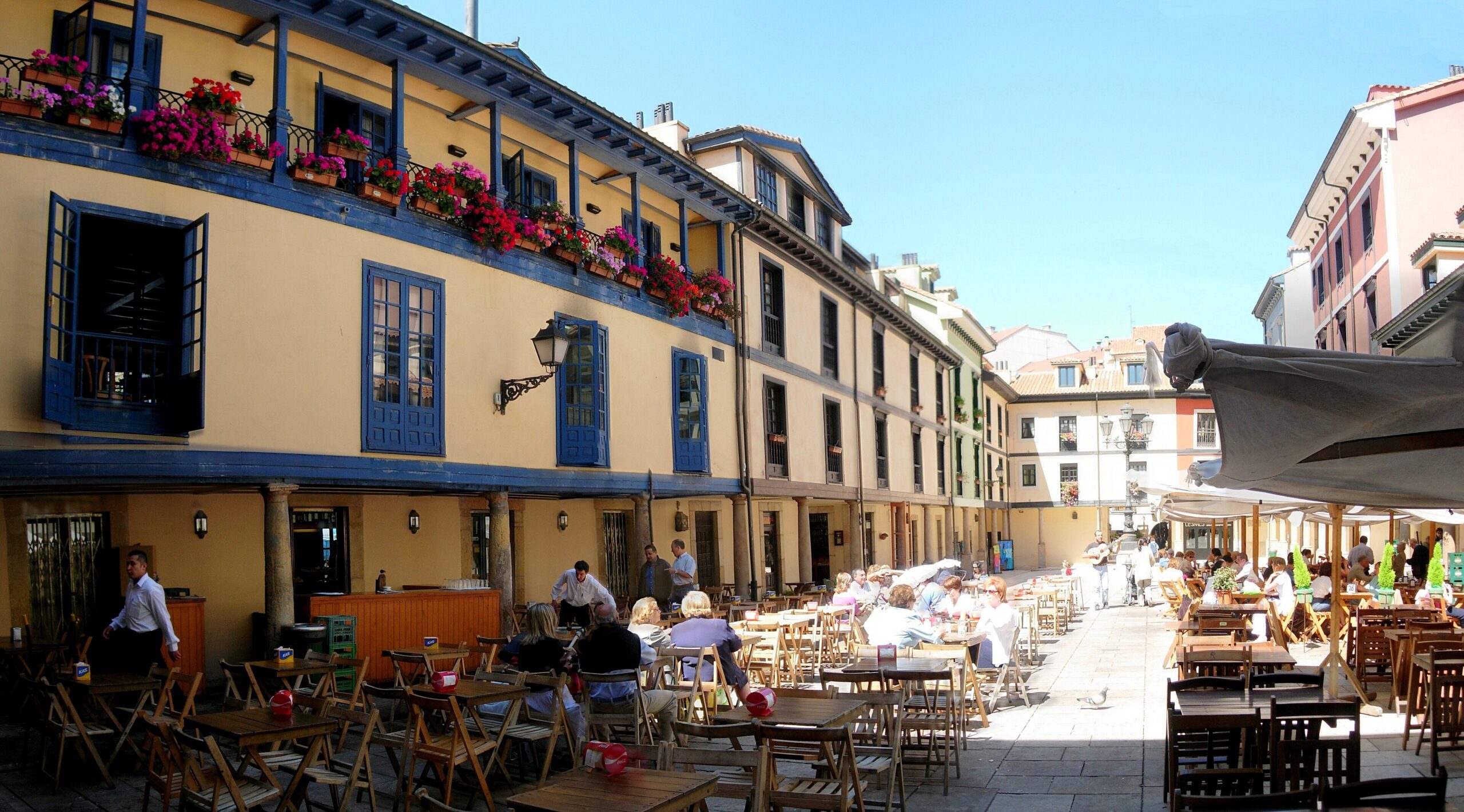
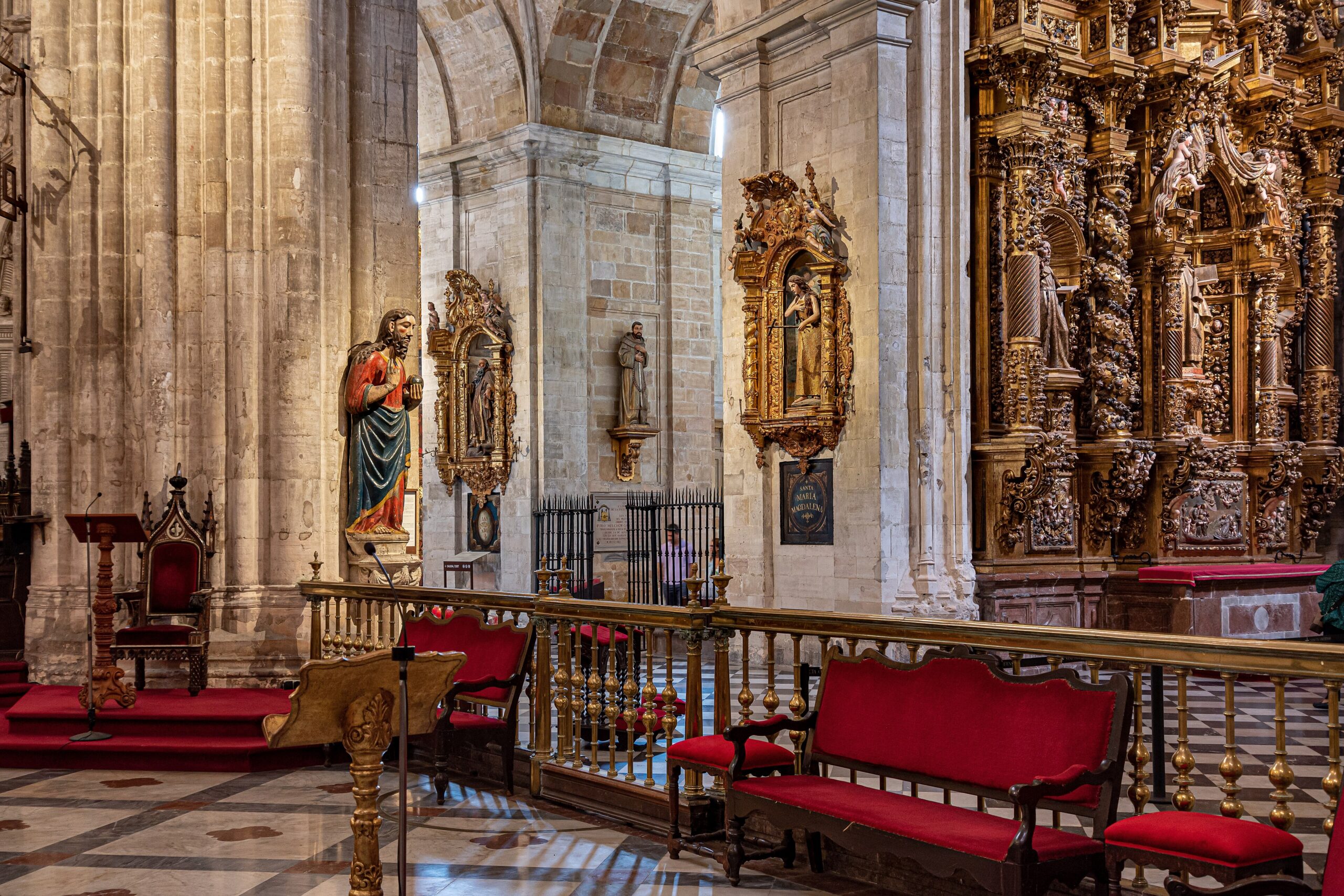
Oviedo was founded in the 8th century and became capital of the small Kingdom of Asturias, the only part of Iberia never conquered by the Moors. That legacy survives in the pre-Romanesque monuments scattered around the city, including Santa María del Naranco and San Miguel de Lillo, both UNESCO World Heritage Sites and unlike anything else built in Europe at the time. The old town itself, rebuilt with care after Civil War damage, still feels intimate and walkable, its arcaded streets opening onto squares dotted with life-size bronze statues that have become an unofficial city trademark.
The vibe: cultured, unhurried, distinctly Asturian
Oviedo has a settled, self-assured character — clean streets, well-dressed locals, and a pace that rewards lingering rather than rushing between sights. It’s often cited as one of Spain’s most liveable cities, and that comfort is tangible: good coffee, good cider, and conversation that isn’t interrupted by tourist crowds. Woody Allen loved it enough to get his own statue on Calle Ferrania, and it’s easy to see why the city appealed to someone looking for calm sophistication over spectacle.
Who Oviedo suits
This is a city for travellers who prioritise culture, food and walkability over beaches and nightlife — couples, culture-seekers, and anyone combining a Camino de Santiago walk with some city comfort. Oviedo is the traditional starting point of the Camino Primitivo, the oldest pilgrimage route to Santiago, so it draws walkers alongside architecture and gastronomy fans. Families will find it manageable too, though those chasing beach holidays should look toward the nearby coast instead.
Cider culture and Asturian cooking
Asturias is Spain’s cider country, and Oviedo’s Calle Gascona — nicknamed the ‘Cider Boulevard’ — is lined with sidrerías where servers pour sidra natural from shoulder height to aerate it before each glass. Pair it with fabada asturiana, a rich bean-and-chorizo stew that’s the region’s signature dish, or with local cheeses like Cabrales. Food here is unpretentious and generous, served in wood-panelled taverns rather than polished restaurants.
Festivals worth timing your visit around
The city’s biggest celebration is the Fiestas de San Mateo in September, a week-long explosion of concerts, parades, fireworks and street cider-drinking to mark the end of summer. Outside the city, the Descenso Internacional del Sella in early August draws thousands to nearby Ribadesella for a river kayak race that’s become one of Asturias’ most popular open-air parties. Both events show a livelier, more boisterous side of a region otherwise known for its calm.
Getting to Oviedo
Asturias Airport (OVD), just outside the city, connects to Madrid, Barcelona and a handful of European cities, making it the fastest option from abroad. Direct trains link Oviedo to Madrid in around four hours, a scenic route through the mountains that many prefer to flying. Drivers coming from elsewhere in northern Spain will find the AP-66 motorway, dramatically cut through the Cantabrian mountains, an attraction in itself.
What to combine it with
Oviedo pairs naturally with Gijón, its larger, more coastal sibling just 30 minutes away, and with the fishing village of Cudillero, all pastel houses stacked above a working harbour. For nature, the Picos de Europa mountains are within a 90-minute drive, offering some of Spain’s most dramatic hiking away from any crowds. Together, they make Asturias one of the country’s most rewarding regions for travellers who want scenery and culture without the coastal tourist rush.
Climate through the seasons
Oviedo has a genuinely Atlantic climate — mild and green, but wetter than most of Spain. Spring brings fresh temperatures and frequent showers that keep the countryside vivid. Summer is pleasantly warm rather than hot, rarely uncomfortable even in August, while autumn turns misty and atmospheric around the September festivals. Winters are cool and rainy but rarely freezing, making Oviedo a year-round destination rather than a strictly seasonal one.
Compare Oviedo holiday deals now and find the best time to explore Asturias’ cultured capital.
Wat is de beste tijd om Oviedo te bezoeken?
De beste periode is van mei tot september, wanneer het mild en droog weer is. In de winter kan het regenachtig en koel zijn, typisch voor het groene Asturië.
Hoe kom je in Oviedo aan?
Oviedo heeft een eigen vliegveld (Asturias Airport) met verbindingen naar Madrid en Barcelona, op ongeveer 45 minuten van het centrum. Er zijn ook goede trein- en busverbindingen vanuit andere Spaanse steden zoals Madrid en León.
Wat zijn de must-see bezienswaardigheden in Oviedo?
Bezoek de gotische kathedraal San Salvador en wandel langs de beroemde beelden van Woody Allen en andere bekende figuren in het historische centrum. Ook de Pre-Romaanse kerken, UNESCO-erfgoed, zijn een absolute must.